
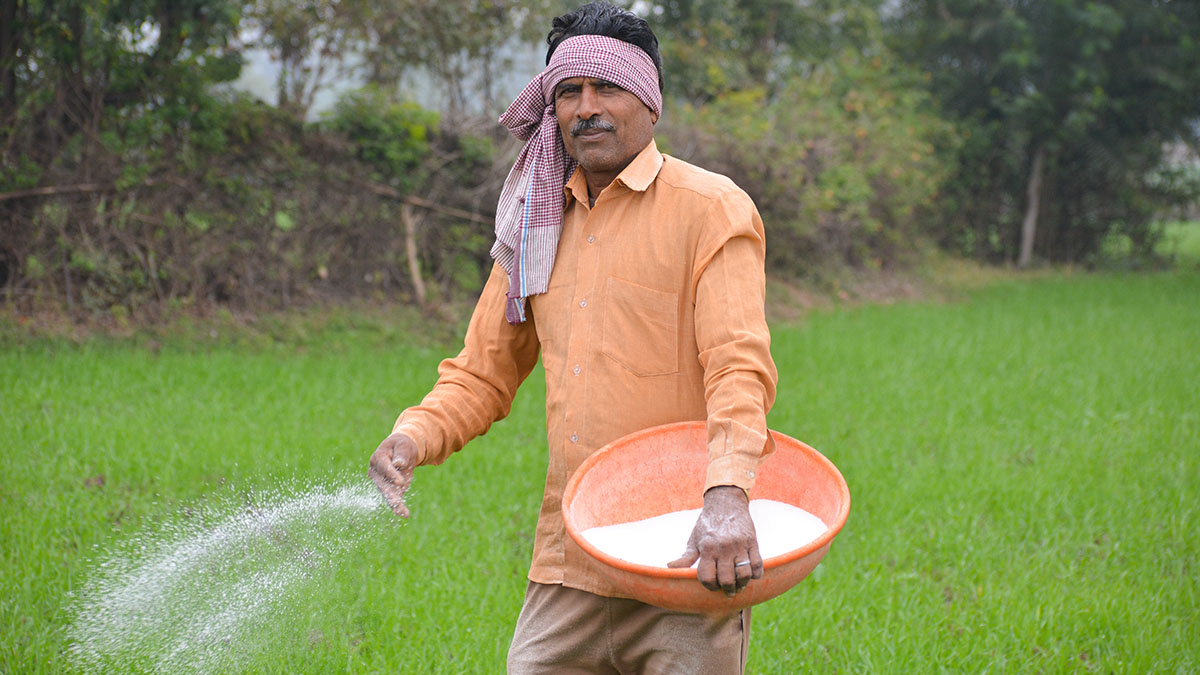
Wheat is one of the most important Rabi crops in India, and for the hardworking farmers of states like Madhya Pradesh, ensuring a healthy and robust harvest is a matter of pride and livelihood. However, one of the biggest challenges that stands in the way of achieving a high yield is the persistent problem of weeds. These unwanted plants compete with the wheat crop for essential resources like sunlight, water, and nutrients, and can significantly reduce the final yield if not managed effectively.
Fortunately, with modern agricultural science, we now have a powerful tool in our arsenal: herbicides. When used correctly, herbicides can provide excellent control over weeds, giving your wheat crop the best possible chance to thrive. This guide will walk you through everything you need to know about weed management in wheat, from identifying common weeds to choosing and applying the most effective herbicides.
Why Weed Management is Crucial for Your Wheat Crop
Weeds are more than just an eyesore; they are a direct threat to your crop’s health and your bottom line. Here’s why effective weed control is so important:
- Reduced Yield: Weeds are aggressive competitors. They can quickly outgrow the wheat seedlings, hogging vital resources and leading to a significant reduction in grain yield, sometimes by as much as 30-40%.
- Lower Grain Quality: The presence of weed seeds in the harvested grain can lower its quality and market value.
- Increased Labor Costs: Manual weeding is labor-intensive, time-consuming, and often impractical for large-scale wheat cultivation.
- Harboring Pests and Diseases: Weeds can act as alternative hosts for various pests and diseases, which can then spread to your wheat crop.
Common Weeds Found in Wheat Fields in Madhya Pradesh
Before you can choose the right herbicide, you need to know what you’re up against. In Madhya Pradesh and surrounding regions, wheat crops are typically infested with two main types of weeds:
1. Grassy Weeds (Monocots)
These weeds belong to the same family as wheat and can be harder to control selectively. The most common grassy weed is Phalaris minor, also known as “Gulli Danda” or Canary Grass.
2. Broad-leaved Weeds (Dicots)
These weeds are easily distinguishable from wheat due to their broad leaves. Common examples include:
- Chenopodium album (Bathua)
- Melilotus indica/alba (Senji)
- Rumex dentatus (Jangli Palak)
- Convolvulus arvensis (Hirankhuri)
- Anagallis arvensis (Krishanneel)
Effective weed management requires a strategy that can tackle both grassy and broad-leaved weeds.
Understanding Herbicides: Your Key to a Weed-Free Field
Herbicides can be broadly classified based on when they are applied in relation to the crop’s lifecycle.
Pre-emergent Herbicides
These herbicides are applied to the soil before the weeds have germinated. They create a chemical barrier in the soil that kills the weed seedlings as they sprout.
- Advantages:
- They control weeds from the very beginning, giving the wheat crop a head start without any competition.
- They are often more effective against grassy weeds like Phalaris minor.
- Considerations:
- They require adequate soil moisture to be effective.
- Application timing is critical.
Post-emergent Herbicides
These herbicides are applied after both the wheat crop and the weeds have emerged from the soil. They work by being absorbed through the leaves of the weeds.
- Advantages:
- They allow you to see the extent of the weed problem before you spray.
- They are effective against both grassy and broad-leaved weeds.
- Considerations:
- They should be applied when the weeds are young and actively growing for the best results.
- The wheat crop should be at the right stage of growth to tolerate the herbicide.
Choosing the Right Herbicide for Your Wheat Crop
Selecting the most effective herbicide depends on the types of weeds in your field and the stage of your crop. Let’s look at some of the most reliable active ingredients and products available, including those from Raj Pesticides Pvt. Ltd.
For Broad-Spectrum Control (Grassy and Broad-leaved Weeds)
Many modern herbicides are formulated to provide control over a wide range of weeds. Here are some of the most effective options for post-emergent application in wheat:
- Clodinafop-Propargyl: This is one of the most widely used herbicides for controlling grassy weeds like Phalaris minor. For comprehensive control, it is often mixed with a herbicide that targets broad-leaved weeds.
- Sulfosulfuron: This is another excellent post-emergent herbicide that provides strong control over Phalaris minor and some broad-leaved weeds.
- Mesosulfuron + Iodosulfuron: This combination provides broad-spectrum control of both major grassy and broad-leaved weeds in wheat.
For Controlling Broad-leaved Weeds
If your primary problem is with broad-leaved weeds like Bathua, Senji, or Krishanneel, these herbicides are highly effective:
- 2,4-D Amine Salt: This is a classic and highly effective post-emergent herbicide for controlling a wide range of broad-leaved weeds. Raj Pesticides’ A-MINE contains 2,4-D Amine Salt 58% SL and is an excellent choice for this purpose. It is economical and provides reliable results.
- Metsulfuron-methyl: This is a low-dose, high-potency herbicide that is very effective against many broad-leaved weeds.
For Pre-emergent Weed Control
- Pendimethalin: This is a widely used pre-emergent herbicide that provides excellent control over annual grasses and some broad-leaved weeds. Raj Pesticides offers Pendi Super (Pendimethalin 38.7% CS), a modern formulation that provides longer-lasting control. It should be applied within 3 days of sowing the wheat crop.
Integrated Weed Management (IWM): A Holistic Approach
While herbicides are a powerful tool, relying solely on them can lead to problems like herbicide resistance in weeds. The best approach is Integrated Weed Management (IWM), which combines various methods for sustainable and effective weed control.
1. Cultural Methods
- Crop Rotation: Rotating wheat with other crops like sugarcane, berseem, or vegetables can help to break the lifecycle of weeds that are specific to wheat.
- Timely Sowing: Sowing wheat at the optimal time helps the crop to establish itself quickly and compete more effectively with weeds.
- Proper Seed Rate: Using the recommended seed rate ensures a dense crop stand, which can smother weeds by cutting off their access to sunlight.
- Clean Seeds: Always use certified, clean wheat seeds that are free from weed seeds.
2. Mechanical Methods
- Tillage: Good seedbed preparation through proper tillage can help to reduce the weed seed bank in the soil.
- Manual Weeding: While not always practical for large areas, one or two sessions of manual weeding or hoeing can be very effective, especially in the early stages of crop growth.
3. Chemical Methods: Best Practices for Herbicide Application
This is where your chosen herbicide comes into play. To get the best results from your herbicide application, follow these best practices:
- Read the Label: The label is your most important guide. Always read the product label carefully for instructions on the correct dosage, application timing, and safety precautions.
- Timing is Everything:
- For pre-emergent herbicides like Pendi Super, apply within 3 days of sowing to a moist seedbed.
- For post-emergent herbicides like A-MINE, the ideal time for application is when the wheat crop is at the 4-6 leaf stage (around 30-35 days after sowing) and the weeds are young and actively growing (at the 2-4 leaf stage).
- Use the Right Equipment: Use a flat fan or flood jet nozzle for a uniform spray. Ensure your sprayer is properly calibrated to deliver the correct amount of water and herbicide per acre.
- Weather Conditions: Avoid spraying on windy days to prevent spray drift to neighboring fields. Do not spray if rain is expected within a few hours, as it can wash away the herbicide.
- Water Volume: Use the recommended volume of water (usually around 150-200 liters per acre) to ensure thorough coverage of the weeds.
- Safety First: Always wear Personal Protective Equipment (PPE), including gloves, goggles, and a mask, when handling and spraying herbicides.
Conclusion: Partnering for a Prosperous Wheat Harvest
Weeds are a formidable foe, but with the right knowledge and the right tools, you can win the battle and protect your wheat crop. An integrated approach that combines good farming practices with the judicious use of effective herbicides is the key to success.
Products like A-MINE and Pendi Super from Raj Pesticides Pvt. Ltd. are designed to provide farmers in Madhya Pradesh with reliable and cost-effective solutions for weed management. By choosing the right product for your specific needs and applying it correctly, you can ensure a clean, healthy field and pave the way for a bountiful wheat harvest.
Your hard work deserves to be rewarded. Don’t let weeds steal your profits. Take control of your fields and look forward to a season of prosperity.
Disclaimer: This article is for informational purposes only. The recommendations for herbicide use are based on general agricultural practices and product information. Please consult with a local agricultural expert or extension officer for specific advice tailored to your field conditions and the weed spectrum in your area.
Frequently Asked Questions (FAQs)
Q1: Can I mix different herbicides together to spray in my wheat field?
While some herbicides are designed to be tank-mixed, it is not always recommended to mix different products without expert guidance. Incompatible mixes can reduce the efficacy of the herbicides or even cause damage to your wheat crop. Always check the product labels for compatibility information or consult with an agricultural expert.
Q2: What is the best time to irrigate my wheat field after applying a post-emergent herbicide?
It is generally recommended to apply post-emergent herbicides when there is adequate moisture in the soil, as this ensures the weeds are actively growing and will readily absorb the chemical. After spraying, it is best to wait for at least 2-3 days before irrigating the field to allow the herbicide to be fully translocated within the weed plants.
Q3: What should I do if I see weeds emerging even after applying a pre-emergent herbicide?
The effectiveness of pre-emergent herbicides can be affected by factors like soil moisture and the density of the weed seed bank. If you see a significant number of weeds emerging, you may need to apply a post-emergent herbicide like A-MINE to control them.
Q4: How does 2,4-D (the active ingredient in A-MINE) work?
2,4-D is a selective, systemic herbicide. It mimics the plant’s natural growth hormones, causing uncontrolled and disorganized growth in broad-leaved weeds, which ultimately leads to their death. It is selective because grass crops like wheat can break it down, while broad-leaved weeds cannot.
Q5: Where can I get genuine Raj Pesticides products for my farm?
To ensure you are getting authentic and high-quality products, always purchase from an authorized dealer of Raj Pesticides Pvt. Ltd. You can contact our customer care or visit our website to find a list of authorized dealers in your region.
