
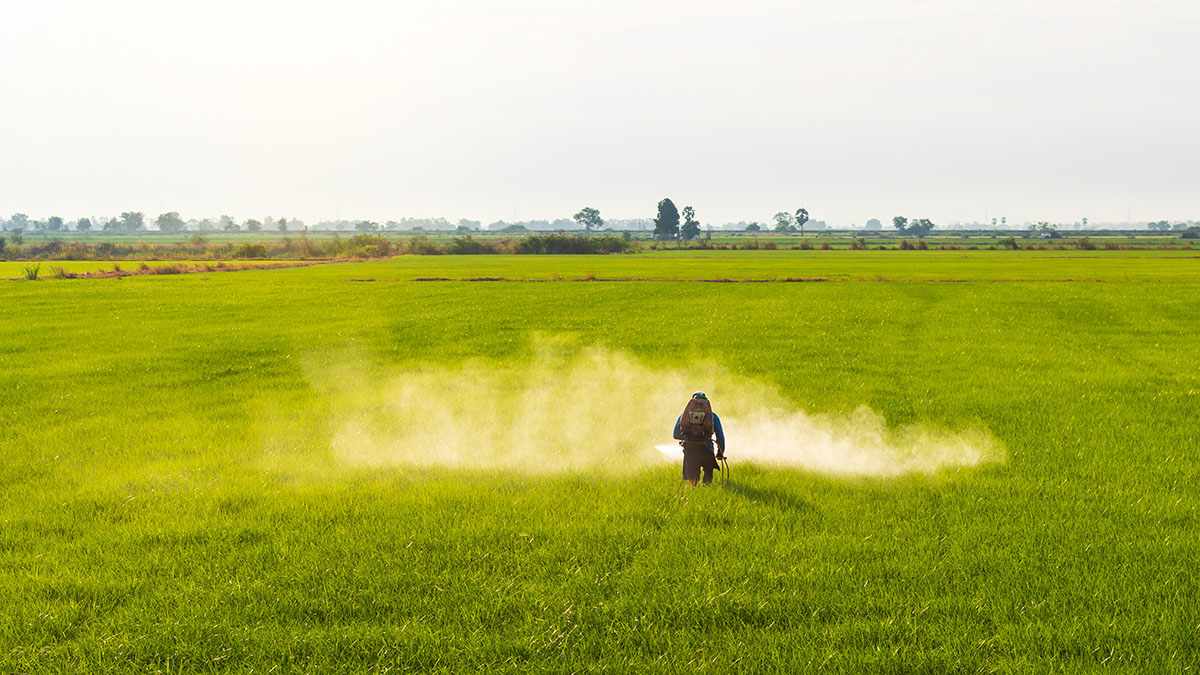
As a farmer in Madhya Pradesh, you are part of the agricultural backbone of our nation. Every season, you face a host of challenges, from unpredictable weather to fluctuating market prices. But perhaps the most relentless battle is the one fought in your fields against an army of silent invaders: pests. Insects, diseases, and weeds can devastate a healthy crop, turning your hard work and hopes into loss.
For decades, the immediate response was often to reach for a chemical pesticide. While these are powerful tools, relying on them alone can be like using a sledgehammer to crack a nut. It can be expensive, lead to pests developing resistance, and may harm the beneficial organisms that naturally protect your fields.
But there is a smarter, more sustainable, and ultimately more profitable way to farm. It’s called Integrated Pest Management, or IPM. This guide is designed to be your trusted resource, explaining what IPM is and how you, a farmer in Madhya Pradesh, can use this approach to protect your crops, improve your soil, and secure your future.
What is Integrated Pest Management (IPM)?
Think of IPM not as a single product or action, but as a complete philosophy for managing your farm. It’s a common-sense approach that combines multiple strategies to keep pest populations at a manageable level, rather than trying to eliminate them entirely.
The goal of IPM is to manage pests in a way that is:
- Economically Viable: It ensures that the money you spend on pest control provides a greater return in terms of saved crops.
- Environmentally Sound: It minimizes risks to the environment, soil, and water.
- Socially Acceptable: It protects the health of you, your family, and the consumers of your produce.
IPM is like being a wise general for your farm. Instead of relying on just one weapon, you use a combination of tactics—cultural, mechanical, biological, and chemical—to outsmart the enemy and win the war against crop loss.
The Four Pillars of a Successful IPM Program
A robust IPM strategy is built on four key pillars. Let’s explore each one and see how you can apply them to your fields in Madhya Pradesh, whether you’re growing soybean, wheat, chickpea, cotton, or chilli.
Pillar 1: Cultural Control – Your First and Best Line of Defence
This is the foundation of IPM. Cultural control involves using smart farming practices that make the field environment less hospitable for pests to thrive in the first place. These are often preventative measures that are inexpensive and highly effective.
- Deep Summer Ploughing: After you harvest your Rabi crop, a deep ploughing in the hot summer months is one of the most powerful things you can do. It exposes the dormant pupae of pests like the Gram Pod Borer and Girdle Beetle, as well as the rhizomes of stubborn weeds, to the scorching sun and to predatory birds, killing them naturally.
- Crop Rotation: Don’t plant the same crop in the same field year after year. Rotating crops (e.g., soybean followed by wheat, then chickpea) breaks the life cycle of pests and diseases that are specific to one crop, preventing their populations from building up.
- Sanitation: Keeping your fields and the surrounding bunds clean is crucial. Remove and destroy crop residues from the previous season. Keep the area weed-free, as weeds often act as hosts for pests (like the whitefly) and diseases.
- Use of Resistant/Tolerant Varieties: The agricultural scientists in our country have developed excellent crop varieties that are naturally resistant or tolerant to major pests and diseases (like Yellow Mosaic Virus in soybean). Always consult your local agricultural extension office for the best-suited varieties for your region.
- Timely Sowing and Harvesting: Sowing your crop at the recommended time helps it to establish well and often allows it to bypass the peak activity period of certain pests.
- Balanced Nutrition: A healthy, well-nourished plant is like a healthy person—it’s better able to defend itself against attacks. Use a balanced dose of fertilizers. Products like Raj Pesticides’ FLORA-G (a bio-fertilizer) and CHAMPION PLUS (containing Humic Acid, Fulvic Acid, and Amino Acid) can significantly improve soil health and nutrient uptake, leading to stronger, more resilient plants.
Pillar 2: Mechanical and Physical Control – Direct Action Against Pests
This pillar involves using physical methods or barriers to trap or remove pests from the field.
- Hand-picking: In the early stages of an infestation, especially for large caterpillars like the Pod Borer, manually picking them off the plants and destroying them can be effective in small fields.
- Setting up Traps:
- Pheromone Traps: These traps use a chemical scent (pheromone) to attract the male moths of pests like the Gram Pod Borer. They are an excellent tool for monitoring pest populations. When you see a sudden increase in the number of moths caught, it’s a warning sign to prepare for an imminent larval attack.
- Light Traps: These can be used to attract and kill night-flying insects.
- Sticky Traps: Yellow and blue sticky traps are very effective for trapping sucking pests like whiteflies and aphids.
- Bird Perches: Installing simple T-shaped perches (about 10-15 per acre) in your field provides a resting spot for predatory birds. These birds are your natural allies and will feed on a large number of insect larvae, providing free and effective pest control.
Pillar 3: Biological Control – Using Nature’s Army
Your farm is an ecosystem, home to many beneficial insects that are the natural enemies of pests. Biological control is all about protecting and encouraging these “farmer’s friends.”
- Conserving Natural Predators: Spiders, ladybugs, dragonflies, and certain wasps are all predators of common crop pests. By using chemical pesticides judiciously, you can protect these beneficial populations.
- Using Bio-pesticides: These are pesticides derived from natural sources like plants, bacteria, and viruses. They are often specific to certain pests and are much safer for the environment and beneficial insects. For example, HaNPV (Helicoverpa armigera Nuclear Polyhedrosis Virus) is a virus that specifically targets the Gram Pod Borer and is an excellent tool in an IPM program.
- Bio-fertilizers for Root Health: A healthy root system is crucial for a strong plant. Raj Pesticides’ MYCORRHIZAL BIO FERTILIZER products like FORTILA and FLORA-G create a symbiotic relationship with the plant roots, improving nutrient and water absorption and making the plant healthier from the ground up. A healthier plant is naturally more resistant to pests and diseases.
Pillar 4: Chemical Control – The Final and Most Powerful Tool
Chemical pesticides are a vital component of IPM, but they are treated as the last resort, not the first. In an IPM program, pesticides are used only when monitoring indicates that the pest population has crossed a certain level, known as the Economic Threshold Level (ETL).
What is ETL? The ETL is the point where the number of pests is high enough to cause economic loss greater than the cost of the pesticide application. Spraying before this level is a waste of money, and spraying too late means you’ve already lost a significant part of your yield.
When chemical intervention is necessary, it’s about using the right product, at the right time, and at the right dose. Raj Pesticides Pvt. Ltd. offers a comprehensive range of quality products that fit perfectly into an IPM strategy.
A Smart Approach to Chemical Use with Raj Pesticides:
- Herbicides for Early Weed Management: Weeds are the first pests to compete with your crop. Using a pre-emergent herbicide like Pendi Super (Pendimethalin 38.7% CS) or a post-emergent herbicide like A-MINE (2,4-D Amine Salt 58% SL) for broad-leaved weeds ensures your crop gets a clean, competition-free start. Effective early-season weed control is a cornerstone of IPM.
- Targeted Insecticides for Specific Pests: Instead of using broad-spectrum chemicals that kill everything, IPM encourages the use of targeted insecticides.
- For Sucking Pests (Whitefly, Aphids): To manage the spread of diseases like Yellow Mosaic Virus, you need effective control of sucking pests. Products like RADER (Thiamethoxam 25% WG) or R-GUN (Diafenthiuron 50% WP) are excellent choices.
- For Chewing Pests (Caterpillars, Borers): For the devastating Gram Pod Borer or Girdle Beetle, you need potent solutions. GENIUS (Chlorantraniliprole 18.5% SC) provides long-lasting control of caterpillars, while combination products like CRIME 404 (Profenofos + Cypermethrin) or GLORY (Novaluron + Emamectin Benzoate) provide a dual mode of action.
- Effective Fungicides for Disease Control: Diseases like rust in wheat, anthracnose in soybean, or fruit rot in chilli can be managed effectively with the right fungicides.
- For Systemic and Contact Action: Products like RAJ ANMOL (Carbendazim 12% + Mancozeb 63% WP) or ATLAS (Captan 70% + Hexaconazole 5% WP) provide both preventative and curative action against a range of fungal diseases.
- For Powdery Mildew and Rusts: MANTHAN (Tebuconazole 10% + Sulphur 65% WG) or RAJ SULPHUR (Sulphur 80% WDG) are excellent choices for these specific problems.
- Plant Growth Regulators (PGRs) for a Stronger Crop: A well-balanced plant is a more productive plant. PGRs like MEQUAT-5 (Mepiquat Chloride 5% AS) for cotton or MAGIC (Paclobutrazol 40% SC) for chilli help to manage the plant’s growth, reduce flower drop, and channel energy towards producing more yield. A stronger plant can better withstand pest pressure.
Conclusion: IPM is a Partnership for Prosperity
Adopting an Integrated Pest Management program is a shift in mindset. It’s about moving from being a reactive firefighter to a proactive farm manager. It requires observation, knowledge, and patience, but the rewards are immense:
- Reduced Costs: By using pesticides only when necessary, you save a significant amount of money.
- Higher, More Stable Yields: Healthy plants in a healthy ecosystem produce more.
- Protection of the Environment: You become a steward of your land, preserving it for future generations.
- Increased Profitability: Lower costs and higher yields directly translate to more money in your pocket.
Raj Pesticides Pvt. Ltd. is committed to partnering with the farmers of Madhya Pradesh on this journey. We believe in “Empowering agriculture with innovative, sustainable solutions”. Our wide range of quality products—from herbicides and insecticides to fungicides and plant growth regulators—are designed to be effective tools within your IPM strategy.
Start small. Begin by incorporating one or two new IPM practices each season. Set up pheromone traps, install bird perches, and start monitoring your fields more closely. When you need a chemical solution, choose a trusted partner who provides quality products. By embracing IPM, you are not just protecting your crops; you are investing in a more sustainable, profitable, and secure future for your farm.
Disclaimer: This guide is for informational purposes only. The recommendations provided are based on general agricultural principles. Always consult with a local agricultural expert or extension officer for advice tailored to your specific field conditions. Always read and follow the product label instructions before use.
Frequently Asked Questions (FAQs)
Q1: Is IPM only for organic farming? Can I still use chemical pesticides? This is a common misconception. IPM is not organic farming. It is a scientific approach that includes the judicious and responsible use of chemical pesticides. The key difference is that in IPM, chemicals are used as a last resort, based on monitoring and economic thresholds, not as a routine preventative measure.
Q2: Implementing IPM sounds complicated. Is it practical for a small farmer? Absolutely. Many IPM practices are very simple and low-cost. Deep summer ploughing, cleaning the bunds, and installing bird perches cost very little but have a big impact. Monitoring your field for pests is something every good farmer already does. IPM simply provides a structured way to make those observations more effective.
Q3: How do I know what the Economic Threshold Level (ETL) is for a pest on my crop? ETLs are determined by agricultural scientists based on extensive research. Your local agricultural university, Krishi Vigyan Kendra (KVK), or agricultural extension officer can provide you with the specific ETLs for the major pests of the crops grown in your area.
Q4: Will using fewer pesticides with IPM not lead to more pest damage? Not necessarily. By strengthening the plant with good nutrition, using resistant varieties, and encouraging natural predators, you are building a more resilient system. The goal isn’t zero pests; it’s keeping the pest population below a level where it causes economic harm. When you do need to spray, the targeted use of effective chemicals ensures you get the best results.
Q5: Where can I find the full range of Raj Pesticides products for my IPM program? Raj Pesticides has a wide network of authorized dealers across Madhya Pradesh and other states. To ensure you are getting genuine, high-quality products, always purchase from an authorized source. You can contact our customer care or visit our website for more information on our products and to find a dealer near you.
