
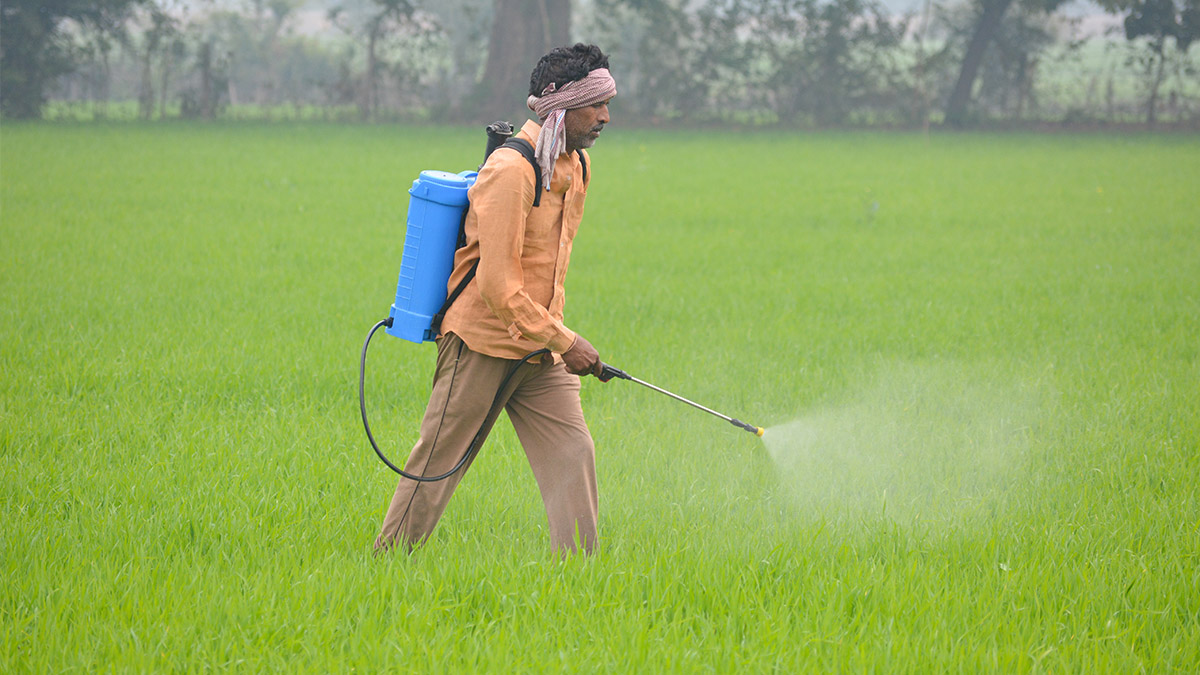
Madhya Pradesh is a leading state in soybean cultivation in India. However, soybean farmers in the state often face significant challenges from pests and diseases, which can drastically reduce crop yields and cause substantial financial losses. Among the most destructive of these are the Girdle Beetle (Obereopsis brevis) and the Yellow Mosaic Disease. Effective management of these two threats is crucial for a successful soybean harvest.
This comprehensive guide will walk you through the lifecycle, identification, and management of the Girdle Beetle and Yellow Mosaic Disease, with a special focus on integrated pest management (IPM) strategies and the effective use of pesticides for farmers in Madhya Pradesh.
Understanding the Girdle Beetle (Obereopsis brevis)
The Girdle Beetle is a notorious pest of soybean crops in Madhya Pradesh. The adult beetle is small, measuring approximately 10-12 mm in length, and has a distinctive appearance characterised by a black head, a reddish-brown thorax, and long antennae. The primary damage is caused by the female beetle’s egg-laying behaviour and the subsequent larval feeding.
How to Identify a Girdle Beetle Infestation
The most prominent symptom of a Girdle Beetle attack is the presence of two parallel rings or “girdles” cut into the stem or petiole of the soybean plant, a few centimeters apart. The female beetle makes these girdles and then lays her eggs in the plant tissue between them. This girdling action disrupts the flow of nutrients to the upper parts of the plant, causing them to wilt and eventually die. The larva that hatches from the egg then bores into the stem, further damaging the plant.
The Lifecycle of the Girdle Beetle
- Egg: The female beetle lays her eggs inside the soybean stem between the two girdles.
- Larva: The grub-like larva hatches and begins to tunnel through the stem, feeding on the internal tissues. This is the most destructive stage.
- Pupa: The larva pupates within the stem.
- Adult: The adult beetle emerges from the stem to repeat the cycle.
The entire lifecycle can be completed in about 40-70 days, depending on environmental conditions.
Damage Caused by the Girdle Beetle
- Wilting and drooping of the plant above the girdle.
- Drying and death of the affected plant parts.
- Reduced plant vigor and stunted growth.
- Hollowed-out stems due to larval feeding.
- Significant reduction in pod formation and grain yield. In severe infestations, yield losses can be as high as 50-60%.
The Threat of Yellow Mosaic Disease
Yellow Mosaic Disease (YMD) is one of the most widespread and destructive viral diseases affecting soybean crops in India. It is caused by the Mungbean Yellow Mosaic India Virus (MYMIV) and is primarily transmitted by the Whitefly (Bemisia tabaci).
Identifying Yellow Mosaic Disease
The symptoms of YMD are quite distinct and easy to identify:
- The appearance of yellow, scattered spots on the young leaves.
- These spots gradually enlarge and merge, forming bright yellow patches.
- In severe cases, the entire leaf may turn yellow, with some green areas remaining along the veins.
- The affected leaves may also show puckering and crinkling.
- The diseased plants are often stunted and produce fewer and smaller pods.
How Yellow Mosaic Disease Spreads
The primary vector for the Yellow Mosaic Virus is the Whitefly. These tiny, sap-sucking insects acquire the virus when they feed on an infected plant and then transmit it to healthy plants during subsequent feeding. The disease can spread rapidly through a field, especially if the whitefly population is high. The disease also spreads through infected seeds.
Damage Caused by Yellow Mosaic Disease
- Reduced chlorophyll in the leaves, which hampers photosynthesis.
- Stunted growth of the plant.
- Reduced number and size of pods.
- Poor grain filling and reduced grain quality.
- Infections in the early stages of crop growth can lead to yield losses of up to 70-80%.
Integrated Pest Management (IPM) for Girdle Beetle and Yellow Mosaic Disease
An Integrated Pest Management (IPM) approach is the most effective and sustainable way to manage these threats. IPM combines cultural, mechanical, biological, and chemical methods to keep pest and disease levels below the Economic Threshold Level (ETL).
1. Cultural Practices
- Deep Summer Ploughing: After harvesting the previous crop, deep ploughing the field in the summer helps to expose the pupae of the Girdle Beetle and other pests to the sun and predators, thereby reducing their population.
- Timely Sowing: Sowing the soybean crop at the recommended time can help in avoiding the peak activity period of the Girdle Beetle and Whitefly.
- Use of Resistant Varieties: Planting soybean varieties that are resistant or tolerant to Yellow Mosaic Disease is the most effective way to manage the disease. Consult with local agricultural extension services for recommended varieties in your area.
- Crop Rotation: Avoid continuous cultivation of soybean in the same field. Rotate with non-host crops like maize or sorghum to break the life cycle of pests and diseases.
- Field Sanitation: Keep the field and surrounding areas free from weeds, as many weeds can act as alternative hosts for the Whitefly and the virus.
- Balanced Nutrition: Provide a balanced dose of nutrients to the crop to ensure healthy growth, which can make the plants more resilient to pest and disease attacks.
2. Mechanical Control
- Removal and Destruction of Infested Plants: Regularly monitor the field, especially during the early stages of crop growth. If you spot plants with the characteristic girdles of the Girdle Beetle or the initial symptoms of YMD, uproot and destroy them immediately to prevent further spread.
3. Biological Control
While biological control methods for these specific issues are still under extensive research, promoting the population of natural predators like spiders, ladybugs, and lacewings in the field can help in managing the population of pests like whiteflies.
4. Chemical Control: The Role of Pesticides
Chemical control is a crucial component of IPM, especially when pest and disease incidence crosses the Economic Threshold Level (ETL). Raj Pesticides Pvt. Ltd. offers a wide range of effective insecticides and fungicides to protect your soybean crop.
Managing the Girdle Beetle with Insecticides
For the Girdle Beetle, it’s essential to target the adult beetles before they can lay eggs. The application of insecticides should be done after observing the initial signs of girdling. Here are some effective active ingredients and corresponding products from Raj Pesticides:
- Thiamethoxam + Lambda-cyhalothrin: This combination is highly effective against a wide range of sucking and chewing pests. Raj Pesticides’ SAMRAT SUPER contains Thiamethoxam 12.6% + Lambda-cyhalothrin 9.5% ZC.
- Profenofos + Cypermethrin: This is another potent combination for controlling the Girdle Beetle. CRIME 404 from Raj Pesticides contains Profenofos 40% + Cypermethrin 4% EC.
- Chlorantraniliprole: This is a modern insecticide that is very effective against lepidopteran pests and has also shown efficacy against the Girdle Beetle. Raj Pesticides offers GENIUS (Chlorantraniliprole 18.5% SC) and GENIUS-GR (Chlorantraniliprole 0.4% GR).
- Fipronil + Imidacloprid: This combination provides a dual mode of action against pests. RACE by Raj Pesticides contains Fipronil 40% + Imidacloprid 40% WG.
Managing Yellow Mosaic Disease by Controlling the Whitefly
Since YMD is a viral disease, there is no direct “cure” for infected plants. Therefore, the management strategy focuses entirely on controlling the vector, the Whitefly.
- Seed Treatment: Treating the seeds with an insecticide before sowing is a highly effective preventive measure. This protects the young seedlings from whitefly attacks for the first few weeks. Raj Pesticides’ RADER-FS (Thiamethoxam 30% FS) is an excellent choice for seed treatment.
- Foliar Sprays: If the whitefly population is high in the field, foliar sprays of insecticides are necessary. Here are some effective options from the Raj Pesticides portfolio:
- Thiamethoxam 25% WG: This systemic insecticide is highly effective against sucking pests like whiteflies. You can use RADER from Raj Pesticides.
- Diafenthiuron 50% WP: This is another excellent choice for controlling whiteflies. Raj Pesticides offers R-GUN.
- Pyriproxyfen + Diafenthiuron: A combination product like JET-525 (Pyriproxyfen 5% + Diafenthiuron 25% SC) can provide very effective control.
Recommended Spraying Schedule and Best Practices
- First Spray: The first foliar spray should be done around 20-25 days after sowing to control the early infestation of whiteflies and other sucking pests.
- Second Spray: A second spray may be required around 40-45 days after sowing, which is the peak period for Girdle Beetle activity.
- Subsequent Sprays: Further sprays should be based on the monitoring of pest populations and should be done only when they cross the ETL.
- Always read the label: Before using any pesticide, carefully read the instructions on the label regarding the correct dosage, application method, and safety precautions.
- Rotate insecticides: To prevent the development of resistance in pests, it is crucial to rotate insecticides with different modes of action.
- Use a sticker/spreader: Adding a good quality sticker or spreader to the spray solution can improve the efficacy of the pesticide by ensuring it adheres well to the plant surface.
Conclusion: Securing Your Soybean Harvest
The Girdle Beetle and Yellow Mosaic Disease pose significant threats to soybean cultivation in Madhya Pradesh. However, with a proactive and integrated approach, these challenges can be effectively managed. By combining cultural practices like timely sowing and the use of resistant varieties with the judicious use of high-quality pesticides from Raj Pesticides Pvt. Ltd., you can protect your crop, boost your yields, and secure a prosperous future. Remember, timely action and regular monitoring are the keys to successful pest and disease management.
For more information on our products and for expert advice on crop protection, please contact our customer care or visit our website.
Disclaimer: This article is for informational purposes only. The recommendations for pesticide use are based on the product information provided. Please consult with a local agricultural expert or extension officer for specific advice tailored to your field conditions.
Frequently Asked Questions (FAQs)
Q1: At what stage of the soybean crop is the Girdle Beetle most active in Madhya Pradesh?
The Girdle Beetle is most active from the vegetative stage to the early reproductive stage of the soybean crop, typically from 30 to 60 days after sowing. This is the period when farmers should be most vigilant.
Q2: Can I control Yellow Mosaic Disease with a fungicide?
No, Yellow Mosaic Disease is a viral disease, and fungicides are only effective against fungal diseases. To control YMD, you must control its vector, the Whitefly, by using effective insecticides.
Q3: What is the Economic Threshold Level (ETL) for Girdle Beetle?
The ETL for Girdle Beetle is generally considered to be when you observe 5-10% of plants showing fresh girdling symptoms. Chemical control measures should be initiated at this point to prevent economic losses.
Q4: Is it safe to use chemical pesticides?
Yes, when used correctly and responsibly, chemical pesticides are safe and effective tools for crop protection. Always follow the manufacturer’s instructions for dosage, application, and safety precautions, including wearing appropriate personal protective equipment (PPE).
Q5: Where can I buy Raj Pesticides’ products in Madhya Pradesh?
Raj Pesticides has a strong network of dealers across Madhya Pradesh. You can contact our customer care number (+91) 95898-50556 to find a dealer near you.
